Overview
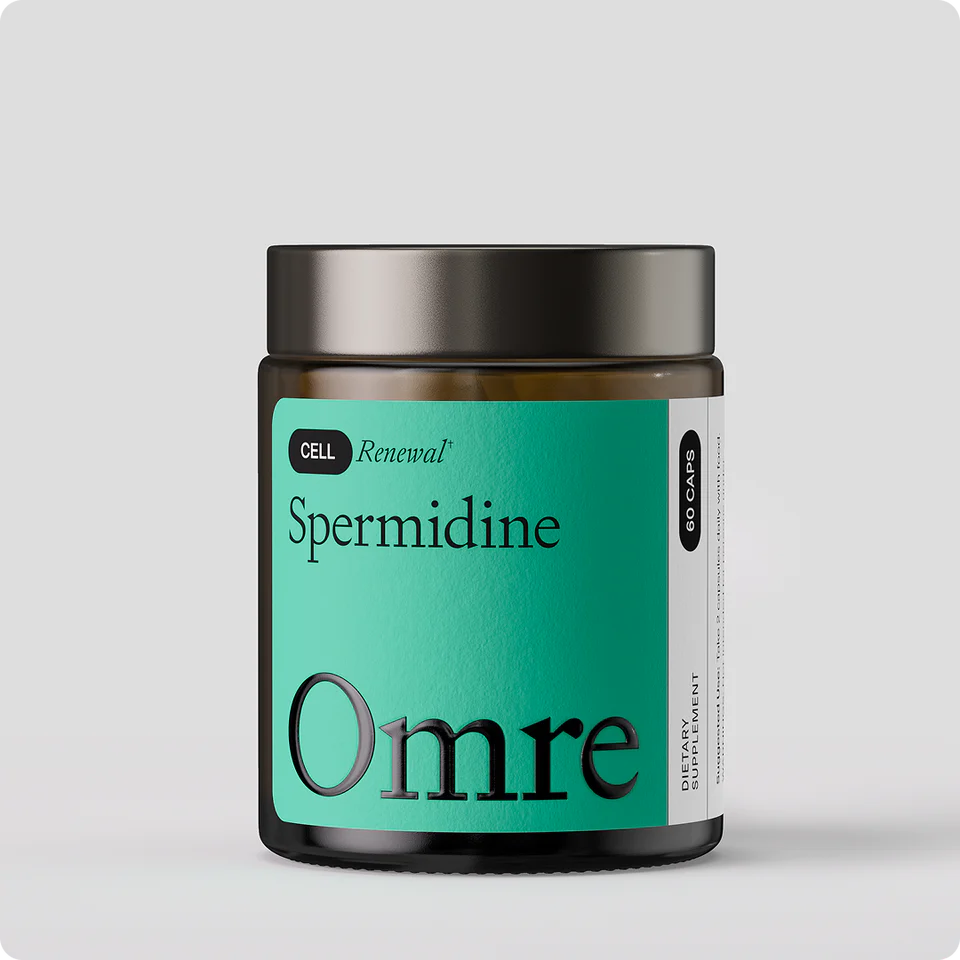
Omre Spermidine occupies a distinctive position in the market as the premier natural-source spermidine supplement. While competitors like partiQlar pursue synthetic purity, Omre takes the opposite approach: a 1% standardized wheat germ extract delivering 10mg of spermidine alongside naturally occurring co-factors — spermine and putrescine.
For buyers who believe in the whole-food philosophy — that nutrients work best in their natural matrix — Omre makes a compelling case. The open question is whether the natural co-factor advantage justifies the wheat allergen trade-off and the $44.97 price point.
We applied our four-dimension scoring rubric to Omre, with particular attention to standardization consistency and the real-world implications of its natural polyamine profile. We’re a desk-research site; we do not run lab tests. See our methodology for details.
Key Benefits
Full-Spectrum Polyamine Complex
Omre’s primary advantage over synthetic alternatives is the full-spectrum polyamine profile. Wheat germ naturally contains not just spermidine but also spermine (a downstream metabolite involved in cell proliferation) and putrescine (a precursor polyamine). Research from the University of Graz suggests these polyamines may work alongside spermidine, with the natural wheat-germ ratio potentially optimizing cellular uptake — though direct head-to-head dose-response data is still limited.
Premium Standardization
At 1% standardization, Omre’s wheat germ extract delivers a labeled 10mg of spermidine per serving — the highest among standardized natural-source spermidine supplements, and at the top of the published autophagy research range. Each capsule contains roughly 1,000mg of wheat germ extract concentrated to that 1% target.
Research-Aligned Source Material
Wheat germ extract has been the spermidine source used in the majority of published clinical and epidemiological studies, including the landmark Bruneck Study and the Austrian polyamine intake research by Eisenberg et al. Choosing Omre aligns supplementation with the source material that appears in peer-reviewed literature.
Ingredients & Formulation
Core Ingredients
Omre’s formula centers on 1% standardized wheat germ extract delivering 10mg of spermidine per serving. The extract preserves the natural polyamine matrix, including:
- Spermidine: 10mg (primary active compound, labeled)
- Spermine: present in natural ratio (not individually quantified on the label)
- Putrescine: present in natural ratio (not individually quantified on the label)
- Wheat germ nutrients: vitamin E, B vitamins, and trace minerals naturally occurring in wheat germ
Manufacturing Standards
Omre is manufactured in a GMP-certified facility with third-party testing for potency, heavy metals, and microbial contaminants. The company provides Certificates of Analysis on request, though they are not as prominently published as partiQlar’s publicly accessible CoAs.
Vendor CoA Highlights
The most recent Omre CoA we’ve reviewed (2025) reports:
- Spermidine content within the tolerance band typical for 1% standardized wheat germ extract.
- Polyamine profile confirmed — spermine and putrescine detected at expected ratios.
- Heavy metals below safety thresholds.
- Wheat allergen presence confirmed (as expected for a wheat germ extract product).
The 1% standardization band on wheat germ extracts is inherently wider than synthetic Trihydrochloride products. We weight CoA availability and recency more than label-vs-CoA tightness, since some variation is unavoidable for botanical extracts.
What Users Report
Publicly visible reviews of Omre across third-party platforms cluster around several themes:
- Users without wheat sensitivity report consistent positive experiences — energy, sleep, skin and nails — in the 3–8 week window.
- A small subset of mildly wheat-sensitive users report transient bloating in the first week.
- Repeat-purchase rates appear high relative to similarly priced natural-source supplements.
- The “natural source” framing is a frequently cited reason for choosing Omre over synthetic alternatives.
We do not run our own trial. The above reflects publicly visible review patterns as of May 2026.
How Omre Compares
Against partiQlar, Omre offers a higher labeled dose (10mg vs. 8mg) and natural co-factors, but at lower purity standardization and with wheat allergen exposure. partiQlar wins on transparency and allergen safety; Omre wins on natural complexity and dose.
Against spermidineLIFE, Omre delivers significantly more spermidine per serving (10mg vs. 1mg) at a lower price ($44.97 vs. $59.00), despite both using wheat germ extract. spermidineLIFE’s advantage is its deep clinical heritage, but the dose differential is stark.
Against Neurogan, both use wheat-derived spermidine, but Neurogan undercuts Omre on price ($24.95 vs. $44.97) with a wider labeled dose range. Omre’s tighter 1% standardization is the trade-off.
For the full comparison, see our Best Spermidine Supplements 2026 rankings.
Final Verdict
Omre Spermidine earns a score of 9.3/10 and our Best Natural Source award. Its 10mg wheat germ–derived formula with natural polyamine co-factors is the premium choice for buyers who prioritize whole-food–derived supplementation. The key trade-off is wheat allergen content — if that’s a concern, partiQlar or Double Wood are the better options.
For everyone else, Omre offers one of the most research-aligned natural spermidine options on the market.
